Rethinking Pronunciation Learning
Rethinking Pronunciation Learning
Rethinking Pronunciation Learning
If pronunciation learning is ultimately about speaking clearly and being understood, how should a digital learning system structure practice around that goal?
SayChinese is a research-led Mandarin Chinese pronunciation platform that translates insights from language learning and speech research into a learner-controlled practice experience.
I led the research, product design and development from initial problem framing through user evaluation and public launch.
User study: 16 adult learners · Mixed methods
Live product: 200+ site visits across 10 countries
MY ROLE
MY ROLE
MY ROLE
Researcher · Product Designer · Developer
Researcher · Product Designer · Developer
I led SayChinese end to end, moving from an observed learning problem to a research-informed product, a live implementation, and a mixed-method user study that shaped the next direction of the experience.
I led SayChinese end to end, moving from an observed learning problem to a research-informed product, a live implementation, and a mixed-method user study that shaped the next direction of the experience.
Research & Problem Framing
I combined learner needs observed across real educational settings with research in language learning, speech science and cognition to frame the problem and develop hypotheses about what pronunciation practice should support.
Research-led Product Design
I translated those hypotheses into a multi-layer practice system, shaping the learning structure, interaction flow and overall experience.
Building the Live Product
I developed the product with AI-assisted coding and external APIs, making technical trade-offs while retaining control over the core learning logic and interaction decisions.
User Research & Iteration
I designed and conducted a mixed-method study to understand how learners used the system, combining behavioural data, questionnaires, observations and interviews to identify patterns and inform the next product direction.
Research & Problem Framing
I combined learner needs observed across real educational settings with research in language learning, speech science and cognition to frame the problem and develop hypotheses about what pronunciation practice should support.
Research-led Product Design
I translated those hypotheses into a multi-layer practice system, shaping the learning structure, interaction flow and overall experience.
Building the Live Product
I developed the product with AI-assisted coding and external APIs, making technical trade-offs while retaining control over the core learning logic and interaction decisions.
User Research & Iteration
I designed and conducted a mixed-method study to understand how learners used the system, combining behavioural data, questionnaires, observations and interviews to identify patterns and inform the next product direction.
THE PROBLEM
THE PROBLEM
Individual Accuracy ≠ Connected Speech
Individual Accuracy ≠ Connected Speech
Individual Accuracy ≠ Connected Speech
Through observing and working with learners in real language-learning settings, I saw the same pattern repeatedly: learners could recognise and pronounce individual words accurately, yet struggle when those same words came together in a sentence.
Knowing the words was not always enough.
Knowing the words was not always enough.
The underlying gap was not simply knowledge of individual sounds, but the shift from isolated practice to connected speech. Learners could often perform well at word level, yet still struggle to hear sentence structure, maintain rhythm, or produce speech that flowed naturally.
Digital pronunciation practice often breaks speech into individual words or sounds to support focused accuracy. While this supports focused practice, it leaves an important gap: helping learners understand how those parts come together in natural speech.
Digital pronunciation practice often breaks speech into individual words or sounds to support focused accuracy. While this supports focused practice, it leaves an important gap: helping learners understand how those parts come together in natural speech.
In Mandarin Chinese, that transition is especially important because pitch, rhythm, phrasing and intonation interact across the sentence. Supporting pronunciation therefore meant designing for both local control and connected speech.
This led to a design question:
This led to a design question:
How might a digital learning system support focused practice without losing the structure and flow of connected speech?
FOUNDATIONAL RESEARCH
FOUNDATIONAL RESEARCH
Designing Around How Speech Is Learned
Designing Around How Speech Is Learned
Designing Around How Speech Is Learned
The problem raised a deeper question: if learners struggled when individual words became connected speech, what changed at sentence level?
To understand that gap, I reviewed research across language learning, speech science, cognition and pedagogy. Three ideas consistently shaped the product direction.
To understand that gap, I reviewed research across language learning, speech science, cognition and pedagogy. Three ideas consistently shaped the product direction.

Connected speech has structure
Rhythm, phrasing and intonation help listeners understand how a sentence is organised.
Rhythm, phrasing and intonation help listeners understand how a sentence is organised.
Product implication → Make phrase-level structure visible.
Product implication → Make phrase-level structure visible.

2. Learners need different levels of focus
2. Learners need different levels of focus
Smaller units help with difficult details, and larger phrases preserve rhythm and flow.
Smaller units help with difficult details, and larger phrases preserve rhythm and flow.
Product implication → Support more than one practice level.
Product implication → Support more than one practice level.
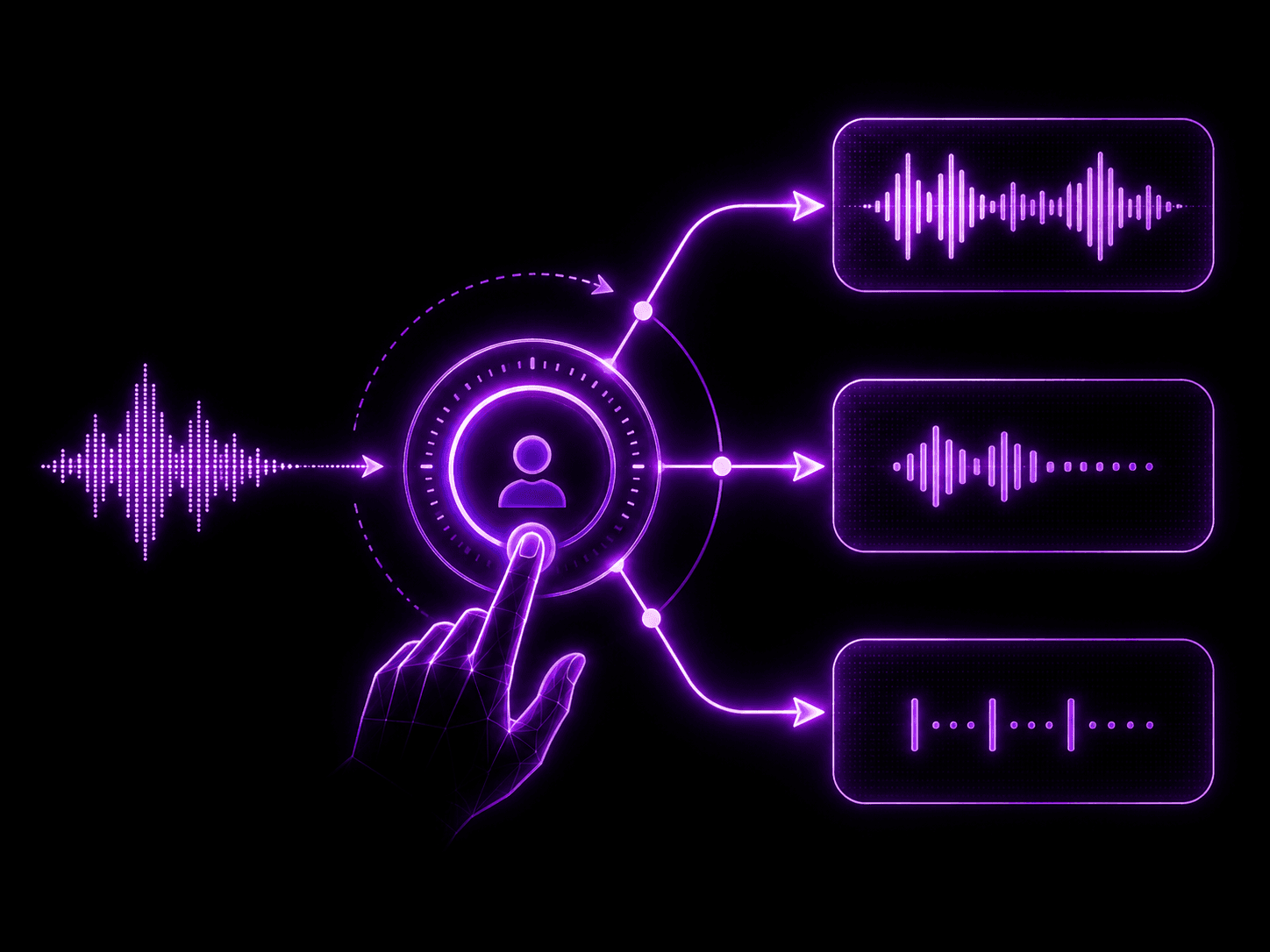
3. Practice needs change within a task
3. Practice needs change within a task
Learners may zoom in on one difficult part, then return to the phrase or full sentence.
Learners may zoom in on one difficult part, then return to the phrase or full sentence.
Product implication → Let learners move easily between levels.
Product implication → Let learners move easily between levels.
Together, these insights suggested that the solution should not force learners into a single level of practice. It needed to preserve the whole sentence while allowing learners to move into smaller levels of support when needed.
Together, these insights suggested that the solution should not force learners into a single level of practice. It needed to preserve the whole sentence while allowing learners to move into smaller levels of support when needed.
That became the basis of the SayChinese practice model.
That became the basis of the SayChinese practice model.
PRODUCT DESIGN
PRODUCT DESIGN
One Sentence, Multiple Ways to Practise
One Sentence, Multiple Ways to Practise
The research suggested that learners needed different levels of support, without being locked into a single practice path.
The research suggested that learners needed different levels of support, without being locked into a single practice path.
I designed SayChinese as a three-layer practice system: full-sentence audio as a shared reference, with two switchable modes for phrase-level and smaller-unit practice.
I designed SayChinese as a three-layer practice system: full-sentence audio as a shared reference, with two switchable modes for phrase-level and smaller-unit practice.

Learners could move freely between the two modes while keeping the full sentence available as a shared reference throughout practice.
Learners could move freely between the two modes while keeping the full sentence available as a shared reference throughout practice.
DESIGN DETAIL
DESIGN DETAIL
The Logic Behind the Segmentation
The Logic Behind the Segmentation
The two practice modes were not created by mechanically splitting sentences into shorter pieces. I defined each unit around meaning, sentence structure and speech rhythm, so that the practice structure reflected how the sentence was actually spoken.
The two practice modes were not created by mechanically splitting sentences into shorter pieces. I defined each unit around meaning, sentence structure and speech rhythm, so that the practice structure reflected how the sentence was actually spoken.

Segmentation became part of the learning design,
not just a technical text-processing step.
Segmentation became part of the learning design,
not just a technical text-processing step.
USER RESEARCH
How Did Learners Use Different Levels of Support?
How Did Learners Use Different Levels of Support?
How Did Learners Use Different Levels of Support?
Once the interaction model was working, I wanted to understand how learners actually used the different levels of support, not simply which mode they preferred.
Once the interaction model was working, I wanted to understand how learners actually used the different levels of support, not simply which mode they preferred.
How did learners use the two practice modes differently?
When and why did they move between levels of support?
How did practice strategies differ across learners?
STUDY DESIGN
STUDY DESIGN
Testing the Interaction Model
Testing the Interaction Model
Testing the Interaction Model
I designed a within-subject study with 16 adult Mandarin Chinese learners. Each participant experienced both practice modes, with the order counterbalanced to reduce potential order effects.
I designed a within-subject study with 16 adult Mandarin Chinese learners. Each participant experienced both practice modes, with the order counterbalanced to reduce potential order effects.

RESEARCH METHODS
RESEARCH METHODS
Connecting Behaviour with Learner Perspectives
Connecting Behaviour with Learner Perspectives
Connecting Behaviour with Learner Perspectives
To understand both what learners did and why, I combined behavioural and self-reported evidence across the study.
To understand both what learners did and why, I combined behavioural and self-reported evidence across the study.
Behavioural Data
Behavioural Data
What learners actually did: time spent, mode switching, audio replays and completion.
What learners actually did: time spent, mode switching, audio replays and completion.
Post-evaluation Questionnaire
Post-evaluation Questionnaire
How learners perceived the usefulness of the two modes and when each felt helpful.
How learners perceived the usefulness of the two modes and when each felt helpful.
Observation
Observation
Where learners hesitated, repeated, switched modes or changed strategy.
Where learners hesitated, repeated, switched modes or changed strategy.
Semi-structured Interviews
Semi-structured Interviews
Why learners made those choices and how they understood each type of support.
Why learners made those choices and how they understood each type of support.
Together, these methods helped me compare what learners did, what they reported, and why they made those choices.
FINDINGS
FINDINGS
Learners Used the Layers as Complementary Support
Learners Used the Layers as Complementary Support
Learners Used the Layers as Complementary Support
Across behavioural data, questionnaires, observations and interviews, one pattern was clear: learners did not treat the two modes as competing options. They used them for different needs and moved between them as those needs changed.
Across behavioural data, questionnaires, observations and interviews, one pattern was clear: learners did not treat the two modes as competing options. They used them for different needs and moved between them as those needs changed.
1. Different Modes Supported Different Needs
1. Different Modes Supported Different Needs
Learners used the two modes for different kinds of practice. Natural Speech Phrases supported rhythm, phrasing, and connected speech, while Smaller Meaningful Units supported focused repetition, difficult words and tones, and targeted repair.
Learners used the two modes for different kinds of practice. Natural Speech Phrases supported rhythm, phrasing, and connected speech, while Smaller Meaningful Units supported focused repetition, difficult words and tones, and targeted repair.

2. Learners Moved Between Modes to Match Their Needs
2. Learners Moved Between Modes to Match Their Needs
Learners rarely treated one mode as a fixed destination. As their needs changed, they moved between phrase-level and smaller-unit practice, zooming in for difficult details and back out to reconnect with rhythm and flow.
Learners rarely treated one mode as a fixed destination. As their needs changed, they moved between phrase-level and smaller-unit practice, zooming in for difficult details and back out to reconnect with rhythm and flow.

Mode switching reflected changing practice needs within the same sentence, rather than a fixed preference for one mode.
Mode switching reflected changing practice needs within the same sentence, rather than a fixed preference for one mode.
3. Full-Sentence Audio Acted as a Shared Anchor
3. Full-Sentence Audio Acted as a Shared Anchor
Learners returned to full-sentence audio before and after focused practice, using it to reconnect local detail with the rhythm and flow of the full utterance.
Learners returned to full-sentence audio before and after focused practice, using it to reconnect local detail with the rhythm and flow of the full utterance.

The full sentence was not just another audio layer; it acted as a shared reference that kept focused practice connected to the whole utterance.
The full sentence was not just another audio layer; it acted as a shared reference that kept focused practice connected to the whole utterance.
4. Different Learners Adopted Different Practice Paths
4. Different Learners Adopted Different Practice Paths
Different practice patterns emerged between the beginner and intermediate groups. Beginner learners tended to rely more on listening, repetition and smaller-unit support, while intermediate learners more often used phrase-level practice as their main path and moved into smaller units selectively when difficulties emerged.
Different practice patterns emerged between the beginner and intermediate groups. Beginner learners tended to rely more on listening, repetition and smaller-unit support, while intermediate learners more often used phrase-level practice as their main path and moved into smaller units selectively when difficulties emerged.

The same system supported different practice strategies without prescribing a single path.
The same system supported different practice strategies without prescribing a single path.
These subgroup patterns were treated as suggestive rather than generalisable proficiency effects.
These subgroup patterns were treated as suggestive rather than generalisable proficiency effects.
SYNTHESIS
SYNTHESIS
Flexible Support Mattered More Than a Single Path
Flexible Support Mattered More Than a Single Path
I began with a learning problem: focused pronunciation practice did not always transfer smoothly into connected speech. Foundational research suggested that learners might benefit from different levels of support, which led to the two-mode practice system.
The user study showed that learners did not simply choose one mode over the other. They used the modes for different purposes, moved between them as their needs changed, and returned to the full sentence to reconnect focused practice with the whole utterance.
The user study showed that learners did not simply choose one mode over the other. They used the modes for different purposes, moved between them as their needs changed, and returned to the full sentence to reconnect focused practice with the whole utterance.
The stronger pattern was not preference for a single mode, but learners’ flexible use of different levels of support within the same practice experience.
The stronger pattern was not preference for a single mode, but learners’ flexible use of different levels of support within the same practice experience.
RESEARCH IMPLICATIONS
RESEARCH IMPLICATIONS
The Core Model Was Supported, but New Needs Emerged
The Core Model Was Supported, but New Needs Emerged
The Core Model Was Supported, but New Needs Emerged
What the study supported
The study supported the overall three-layer structure: learners used the two modes for different purposes, moved between them as their needs changed, and returned to full-sentence audio as a shared reference.
The study supported the overall three-layer structure: learners used the two modes for different purposes, moved between them as their needs changed, and returned to full-sentence audio as a shared reference.
What learners still wanted
Interviews and post-evaluation feedback surfaced needs the current experience did not yet address: learners wanted to record and revisit their own speech, receive more informative pronunciation feedback, and practise pronunciation in more interactive, communicative contexts.
The next opportunity was therefore not to replace the flexible practice model, but to extend it with better feedback and contextual practice while preserving learner control.
The goal is not to automate the learner’s path, but to provide better signals for what to practise next while keeping control with the learner.
NEXT ITERATION
NEXT ITERATION
From Flexible Practice to More Guided Support
From Flexible Practice to More Guided Support
From Flexible Practice to More Guided Support
The research suggested that the core practice structure should remain flexible, while learners wanted more support in understanding their own production, identifying what needed attention, and applying pronunciation in communicative contexts.
The research suggested that the core practice structure should remain flexible, while learners wanted more support in understanding their own production, identifying what needed attention, and applying pronunciation in communicative contexts.
Recording & self-review
Recording & self-review
Research signal
Research signal
Learners wanted to record and revisit their pronunciation.
Learners wanted to record and revisit their pronunciation.
Design hypothesis
Design hypothesis
A record–replay–compare feature could help learners reflect on their own production and build greater self-awareness while preserving learner control.
A record–replay–compare feature could help learners reflect on their own production and build greater self-awareness while preserving learner control.
2. Actionable pronunciation feedback
2. Actionable pronunciation feedback
Research signal
Research signal
Learners wanted clearer information about what they were doing well and what needed attention.
Learners wanted clearer information about what they were doing well and what needed attention.
Design hypothesis
Design hypothesis
Lightweight feedback on pronunciation, tone, rhythm and connected speech could help learners identify where to focus next without overwhelming them.
Lightweight feedback on pronunciation, tone, rhythm and connected speech could help learners identify where to focus next without overwhelming them.
3. Communicative practice
3. Communicative practice
Research signal
Research signal
Learners expressed interest in practising pronunciation through more interactive, contextual exchanges.
Learners expressed interest in practising pronunciation through more interactive, contextual exchanges.
Design hypothesis
Design hypothesis
Short peer-learning or AI-supported conversational activities could help learners apply focused pronunciation work within meaningful connected speech.
Short peer-learning or AI-supported conversational activities could help learners apply focused pronunciation work within meaningful connected speech.
The next iteration would build guidance around the existing flexible structure rather than automate the learner’s path. The goal is to help learners notice, decide and act while keeping control with them.
REFLECTION
REFLECTION
Research Should Shape the Learning Experience, Not Just Evaluate It
Research Should Shape the Learning Experience, Not Just Evaluate It
Research Should Shape the Learning Experience, Not Just Evaluate It
Educational products should be research-grounded
Effective learning experiences should not begin with interface patterns alone. For SayChinese, linguistic, cognitive and pedagogical research shaped the practice structure before interaction details were designed.
Effective learning experiences should not begin with interface patterns alone. For SayChinese, linguistic, cognitive and pedagogical research shaped the practice structure before interaction details were designed.
Learner control mattered more than a prescribed path
The study reinforced the value of giving learners access to different levels of support and allowing them to move between them as their needs changed, rather than forcing everyone through the same sequence.
The study reinforced the value of giving learners access to different levels of support and allowing them to move between them as their needs changed, rather than forcing everyone through the same sequence.
Flexibility still needs guidance
Choice alone is not enough. The next challenge is helping learners understand when to focus on smaller details, when to return to the whole utterance, and what to practise next without taking control away from them.
Choice alone is not enough. The next challenge is helping learners understand when to focus on smaller details, when to return to the whole utterance, and what to practise next without taking control away from them.
For me, the broader lesson was that research-led educational design is not about adding more features; it is about making the relationship between learning needs, evidence and interaction decisions explicit.
CURRENT STAGE
CURRENT STAGE
The Live Product Is Extending the Research
The Live Product Is Extending the Research
The Live Product Is Extending the Research
SayChinese is now publicly available, with 200+ site visits across 10 countries.
The live release provides a broader real-world context beyond the initial 16-participant study.
The live release provides a broader real-world context beyond the initial 16-participant study.
Return behaviour
Which parts of the practice experience do learners return to?
Which parts of the practice experience do learners return to?
Friction
Where does usage suggest friction or a need for additional support?
Where does usage suggest friction or a need for additional support?
Emerging needs
What do learners ask for as they continue using the product?
What do learners ask for as they continue using the product?
Rather than treating the roadmap as fixed, I am using these signals to decide which next-iteration hypotheses are worth testing first.
Rather than treating the roadmap as fixed, I am using the public release to understand how the product performs beyond the initial study: which features learners return to, where friction appears, and what support they ask for next.